Sunday, April 4, 2010

Canadians Sawyer and Wilson face off for Hugo Award for Best Novel


Toronto area-authors Robert J. Sawyer and Robert Charles Wilson are facing off once again for science-fiction's top international honour, the Hugo Award for Best Novel of the Year.

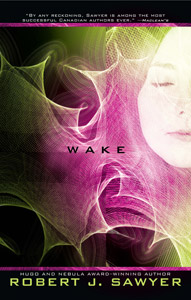
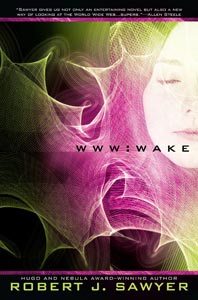
Sawyer's Wake (published by Viking Canada / Ace USA / Gollancz UK) and Wilson's Julian Comstock: A Novel of 22nd Century America (Tor Books) are two of the six finalists for the Hugo, which will be awarded Sunday, September 5, 2010, at a gala ceremony as the highlight of the 68th annual World Science Fiction Convention, which is being held this year in Melbourne, Australia.

Wake tells the story of Caitlin Decter, a blind 15-year-old math genius in Waterloo, Ontario, who discovers a nascent intelligence lurking on the World Wide Web. Julian Comstock is a satiric Victorian-style novel set in a post-apocalyptic Christian-fundamentalist United States.

The full list
of Best Novel nominees, announced April 4, 2010, in Melbourne, Australia:
  • The Windup Girl by Paolo Bacigalupi
  • The City & The City by China Mieville
  • Boneshaker by Cherie Priest
  • Wake by Robert J. Sawyer
  • Palimpsest by Catherynne M. Valente
  • Julian Comstock: A Novel of 22nd Century America by Robert Charles Wilson
(Bacigalupi, Priest, and Valente are Americans; Mieville is British.)

Sawyer shares an additional Hugo nomination this year in the category of Best Dramatic Presentation (Short Form) for "No More Good Days," the pilot episode of the ABC TV series FlashForward, scripted by Brannon Braga and David S. Goyer and based on Sawyer's novel of the same name.

The Hugos also honour short fiction, and in the novelette category "The Island" by Toronto's Peter Watts is a finalist. In addition, the Hugos honour work in fan categories, and three Canadians are competing there: Lloyd Penney of Toronto and James Nicoll of Kitchener for Best Fan Writer, and Taral Wayne of Toronto for Best Fan Artist. All nominees in all categories are listed here.

Sawyer's Wake is also currently one of five finalists for the Aurora Award, Canada's top honour in science-fiction, for Best English Novel of the Year. Wilson's Julian Comstock is expanded from his earlier novella "Julian: A Christmas Story," which was a previous Hugo finalist.

Both Sawyer and Wilson are previous winners of the Best Novel Hugo: Sawyer took the prize in 2003 for Hominids, and Wilson won in 2006 for Spin. Sawyer and Wilson — known as "Rob and Bob" in science-fiction circles — have faced each other on the best-novel Hugo ballot twice before: both were nominees for the award in 1999 and in 2004. This is Wilson's 6th Hugo nomination, and Sawyer now has 13.

Previous Hugo Award-winning novels include Stranger in a Strange Land by Robert A. Heinlein, Dune by Frank Herbert, The Dispossessed by Ursula K. Le Guin, Ender's Game by Orson Scott Card, A Canticle for Liebowitz by Walter M. Miller, and Neuromancer by William Gibson.

Watch, the sequel to Sawyer's current-finalist Wake, is being launched this Tuesday, April 6, at 7:00 p.m., at Dominion on Queen pub, 500 Queen Street West, in Toronto; the event, which kicks off Sawyer's 14-city cross-Canada book tour for Watch, is free and open to the public.

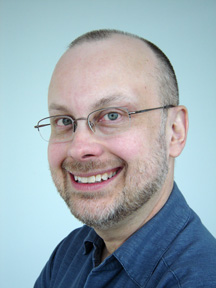
Robert J. Sawyer, 49, was born in Ottawa and lives in Mississauga, Ontario. Robert Charles Wilson, 56, was born in Whittier, California, and lives in Concord, Ontario; he became a Canadian citizen last year.

LINKS:

Publication-quality photo: Sawyer (left) and Wilson (right) with their previous Hugo trophies (photo by Carolyn Clink)

The Robert J. Sawyer website

The Robert Charles Wilson website

Sawyer award statistics via Locus, the science-fiction trade journal

Wilson award statistics

The Hugo Awards official site

This year's World Science Fiction Convention

Robert J. Sawyer online:
Website • Facebook • Twitter • Newsgroup • Email

Labels: , ,


Monday, March 15, 2010

Another Kuroda

I revealed in this blog post that the character of Kuroda, the information theorist from my WWW trilogy consisting of Wake, Watch, and Wonder, is named for the PROBE Control telemetry specialist Kuroda from the 1972 TV series Search, which had a big influence on me.

But I should note that there's another Kuroda in science fiction: the man known as "The Last Kamikaze" from the episode of that title from The Six Million Dollar Man. The Kuroda on Search was played by Byron Chung; the Kuroda on SMDM was played, absolutely brilliantly, by John Fujioka. For those who thought SMDM nothing but mindless action adventure, I commend "The Last Kamikaze" to your attention: I can't watch it without getting tears in my eyes. You can read all about the SMDM character in the Bionic Wiki here.

Judy Burns wrote "The Last Kamikaze" (and its sequel, "The Wolf Boy"), and co-wrote the original Star Trek episode "The Tholian Web."
Robert J. Sawyer online:
Website • Facebook • Twitter • Newsgroup • Email

Labels: ,


Saturday, March 13, 2010

Is Wake a YA novel?


I received this note from a Canadian academic today:
Interestingly enough, WWW: Wake is filed at my local library as a young-adult book, presumably because the protagonist is 15. I'm just curious: do you consider Wake to be a YA novel? And if so (or not) why?
Here's my response:

Am I a young-adult author -- and is this a new thing?

Yes to the former, and no to the latter.

I made the New York Public Library's prestigious "Best Books for the Teen Age" YA list (yes, that awkward wording is the actual title, for historical reasons) for 1992 for my novel Far-Seer. The whole "Quintaglio Ascension" trilogy, of which Far-Seer is the first volume, is often viewed as YA (and the protagonist of the first book is clearly an adolescent). The books were very favourably reviewed in the standard book-recommendation sources used by YA librarians, VOYA ("Voice of Youth Advocates") and KLIATT: Young Adult Paperback Book Guide (including starred reviews, denoting works of exceptional merit, for both Far-Seer and, the second volume, Fossil Hunter).

And in creating Wake, the first volume of my current WWW trilogy, I consulted on what was appropriate for YA novels with my great friend Elisabeth Hegerat, a YA librarian in Alberta; it was absolutely my intention to appeal to both the adult and YA markets with the WWW trilogy.

That said, what I do is simply write books; it is for others to categorize them. For instance, Wake had a nice run on the Amazon.com Technothrillers bestsellers list, including hitting #1; I didn't consciously craft it as a technothriller, nor did my publisher market it as such, but others did categorize it that way.

On the other hand, I do think of myself as a writer of utopian fiction, both with my Neanderthal Parallax trilogy of Hominids, Humans, and Hybrids, and the WWW trilogy of Wake, Watch, and Wonder, but so far few others have classified my work that way (with Richard Parent in The New York Review of Science Fiction being a notable exception).

I'm sure many writers fancy the same thing, but I rather like to think my books are mostly sui generis: they are in their own category, rather than being attempts to squeeze into, piggyback on, or emulate the work of others. For that reason, one of my all-time favourite reviews of my own work was Mark Graham's assessment in The Rocky Mountain News (Denver) that he likes my books because "[Sawyer] doesn't imitate others or himself."

Certainly in Canada where I've had considerable success as a mainstream author, and as part of the non-genre Canadian literature scene, it's true that large numbers of my readers don't consider themselves science fiction readers -- or young-adult readers, for that matter. They're Robert J. Sawyer readers -- and that, rather than where the books might fall in some abstract taxonomy, is all that ultimately matters to me.
Robert J. Sawyer online:
Website • Facebook • Twitter • Newsgroup • Email

Labels:


Sunday, February 28, 2010

Aurora Award finalists 2010!


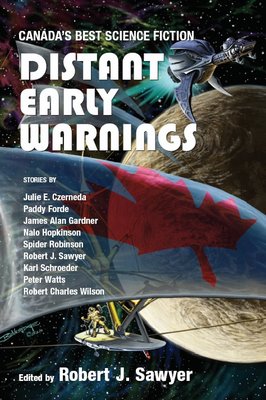
I'm delighted and thrilled to be on the 2010 Aurora Award ballot twice: in the "Best Long Form English" category for Wake, published by Viking (Penguin) Canada, and in the "Best English Other" category for Distant Early Warnings: Canada's Best Science Fiction, which I edited for Red Deer Press.

The full list of nominees is here.


Robert J. Sawyer online:
Website • Facebook • Twitter • Newsgroup • Email

Labels: , , ,


Tuesday, February 2, 2010

Wake review roundup


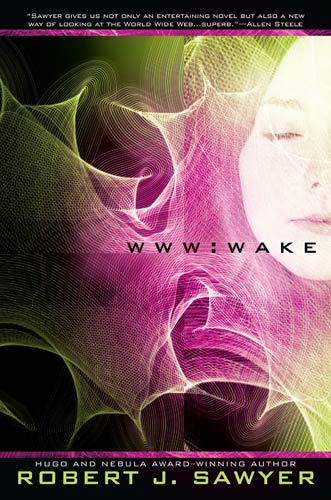
Since we're in the thick of Hugo, Nebula, and Aurora Award-nominating season, forgive me for this roundup of reviews of my 2009 novel Wake (published in the US by Ace as WWW: Wake).


"The thought-provoking first installment of Sawyer's WWW trilogy explores the origins and emergence of consciousness. The thematic diversity — and profundity — makes this one of Sawyer's strongest works to date." —Publishers Weekly (starred review, denoting a book of exceptional merit)


"Extremely well written and complex making Tron look like pre-school, this is a terrific first tale in what looks like will be a great trilogy." —Alternative-Worlds.com


"Wake was serialized in Analog recently; those who read it in these pages don't need me to tell them what a good book it is.

"For many years now, Robert J. Sawyer has been turning out imaginative, thought-provoking science fiction novels set in the present day and dealing with the impact of science and technology upon relatively ordinary people. A typical Sawyer tale brings together multiple diverse elements from popular culture, psychology, physics, and philosophy; stirs together plausible advances in science with appealing characters; adds some realistic depictions of actual scientists at work and a generous helping of old-fashioned sense-of-wonder; and filters the whole mix through a distinctly Canadian filter. Wake is no exception.

"Caitlin is an appealing enough character, and the premise is fascinating: a girl, blind from birth, gains the ability to see the structure of the Internet from within. A lesser writer would go with this story, following Caitlin as she learns to deal with this new, expanded world. But this is Sawyer, and there's much, much more going on.

"Along the way, Sawyer raises fascinating, complex questions about the nature of consciousness and self-awareness, of communication between disparate intelligences, and compassion across huge gulfs. This is a book that you'll still be thinking about for weeks after you finish reading it." —Analog Science Fiction and Fact


"Wake provides a refreshing intersect of science and real life, of consciousness and perception, of imagination and potential. Sawyer puts the science back in science fiction and does it with panache." —Bitten by Books


"Sawyer's take on theories about the origin of consciousness, generated within the framework of an engaging story, is fascinating, and his approach to machine consciousness and the Internet is surprisingly fresh." —Booklist


"A very entertaining read. Sawyer has written a pretty fast paced novel with Wake. Deceptively so in fact. Although it does not slow the story down he has packed the text with references to developments in information technology, mathematics, physics, linguistics and a number of other fields. Parts of the novel read like Oliver Sacks writing science fiction." —Bookspot Central


"While this is clearly a novel of big ideas, the author never neglects the individual characters. Caitlin, her parents, Dr. Kuroda, and even the kids at school all seem very realistic. Allowing us to follow Caitlin's story from her point of view works perfectly. She's a teenager, so she's moody and very human; but she's a very smart girl, applying knowledge to new situations and grasping abstract concepts with relative ease. She's a great character, with flaws and a sense of humor." —CA Reviews


"I shouldn't be shocked that Sawyer has done has homework and is able to predict things that could happen in the near future. He's had a long, distinguished career of doing just that and his new novels are always those I look forward to reading next. Wake is no exception.

"While the book is full of big ideas, those ideas are grounded in identifiable characters. The main focus of the story is Catlin and her journey from lack of sight to her new ability to see. Sawyer ably puts the reader inside the mind and experience of Catlin, making us see how she works within the world while being blind and how she must learn to adapt to a world where she can see. Catlin's story will have you feeling her joy, her frustration and her curious nature in how she relates to the world." —The Dragon Page


"I love the fact that Robert J. Sawyer is smarter than me. There is a breadth to his concepts and ideas in his latest novel,

Wake, that is exhilarating, if not exhausting. In the hands of a less skilled and less focused author, it would be like tab-surfing Wikipedia. Wake, however, is an engrossing, fascinating and, yes, challenging novel to read. Wake has more great and intriguing ideas, philosophies and concepts interwoven throughout the plot than should be allowed in a single novel.

"Wake is founded on theories that communication, in any form, is not just a way of sharing information, but is the central construct for all education, for true emancipation as well as the vehicle of all empathy and understanding. This is why Sawyer's Wake succeeds; his unabashed optimism and hope for a shared future that is no longer bound and tethered by tyranny, petty opportunism and fear." —FFWD, aka Fast Forward Weekly (Calgary, Alberta)


"Wake by Robert J. Sawyer is another delight from the pen of an author who knows how to romp through the kind of speculation which makes science fiction most fun. Definitely give this one a try." —Fort Morgan Times (Colorado)


"Robert J. Sawyer's books are for me among a select group. When there's a new Robert J. Sawyer book available, all other leisure activities go on hold until it's read. Robert J. Sawyer writes science fiction that makes you think. His books often tackle the philosophical questions of our time, and the philosophical questions we may need to confront at a future time.

"The main human character in [Wake] is Caitlin Decter. She's 15, a mathematics wizard, a frequent blogger on her LiveJournal — and a blind user of JAWS. It's rare to find novels where the main character is blind, let alone when where the research has clearly been so meticulous." — Jonathan Mosen, Vice-President of Blindness Hardware Product Management, Freedom Scientific [makers of JAWS]


"Wake often feels like a counterargument, both in style and content, to Neuromancer. One hopes that the next two volumes will step out of Gibson's long, dark shadow and build on the solid foundation laid in the first book. If Sawyer succeeds in this, the final nail will be hammered into Cyberpunk's coffin and the world will have a new way to write about the Internet. ... Wake is a major work by one of SF's heavyweights.

"Reading this book feels like watching a magic trick. Sawyer starts with a few pieces of string, shows you what's up his sleeves — nothing — and then starts tying them together. He steps back, gives the ropes a good yank and — Ta-Da — you have a tidy knot in the shape of a brain.

"The literati could very well be, to a person, too bloody stupid to see any of this. They seem to think that a tight plot construction and a clear prose style are inartistic. Sawyer gets a lot of well-deserved respect as a storyteller and as a science pundit but not enough as a prose stylist. It should not be overlooked that he is a science fiction writer. Sawyer attacks the novel from different points of view, using different styles and narrative tools; creates suspense while never employing an antagonist, tells history through a symbolic representation of consciousness and creates a character out of nothing. He does all of this so well and layers in so much page-turning, forward thrust, that the extent of his style is invisible." —The Grumpy Owl


"Robert J. Sawyer is widely considered one of the most inventive and popular writers in the science fiction genre, and here's why: he imagines things that are wildly fanciful, and he makes them seem not only plausible, but downright inevitable. Sawyer has a knack for taking realistic characters and plunking them down in stories that might seem far-fetched, if they weren't so vividly imagined and elegantly told. He's an excellent storyteller, and you catch him here at his very best." —Halifax Chronicle-Herald


"Sawyer continues to push the boundaries with his stories of the future made credible. His erudition, eclecticism, and masterly storytelling make this trilogy opener a choice selection." —Library Journal


"Wake is a marvelous story [with] a convincing narrative from the AI perspective. What I like best about this novel is Sawyer's casual dropping in of various bits of history that I know, and other bits of current fact that I haven't paid attention to. Eye openers on Chinese politics and insights into research into communicating with chimpanzees make this novel an eclectic reading SF fan's delight.

"Sawyer's SF story of an Artificial Intelligence dawning in the World Wide Web has the emotional impact of Buffy fighting demons from another dimension." —Jacqueline Lichtenberg in The Monthly Aspectarian


"Wake is about as good as it gets when it comes to science fiction. In Caitlin, Sawyer has created a likable and sympathetic hero. She's smart, sure, but also full of sass, which lends itself to some wildly entertaining reading. Sawyer's combination of writing skill and computing background come together marvelously in this book. The characters are rich and realistic, while the ideas are fresh and fascinating." —The Maine Edge, Bangor, Maine


"Unforgettable. Impossible to put down." —Nebula Award-winner Jack McDevitt


"When I am asked what my favourite science fiction novel is, invariably the answer is: `The last one by Robert Sawyer.' With the publication of Wake,

Rollback must sadly make way for the new title holder. Wake is, in the words of its heroine, made out of awesome." —McNally Robinson, Canada's second-largest bookstore chain


"Sawyer's treatment of the awakening of a consciousness from a man-made construct (in this case the web) coupled with the awe and wonder of a blind person's journey to sight is brilliant.

"Without revealing the ending, I have to say it had one. So many authors of multi-volume works don't bother tying up enough of the loose ends to keep the reader satisfied at the end of any but the last volume. When we have to wait at least a year for the next installment, I think the author owes us one. Sawyer came through with a most satisfying ending -- not even rushed.

Wake also ends with a perfect last line. But no peeking!" —MostlyFiction Book Reviews


"Sawyer is one of the most successful Canadian writers ever. He has won himself an international readership by reinvigorating the traditions of hard science fiction, following the path of such writers as Isaac Asimov and Robert A. Heinlein in his bold speculations from pure science. Clashes between personalities and ideologies fuel [Wake's] plot, but they're not what the book is about. It's about how cool science is.

"Sawyer has marshalled a daunting quantity of fact and theory from across scientific disciplines and applied them to a contemporary landscape — with due regard to cultural and political differences, pop culture, history, economics, adolescent yearnings, personal ambition and human frailty." —National Post


"Sawyer paints a complete portrait of a blind teenage girl, and imagines in detail — from scratch — the inside of a new being. Almost alone among Canadian writers, he tackles the most fundamental questions of who we are and where we might be going — while illuminating where we are now." —The Ottawa Citizen


"A superb work of day-after-tomorrow science fiction; I enjoyed every page." —Hugo Award-winner Allen Steele


"From an author who has written many books and has won just about every award a science fiction author can comes one of the most original and fascinating novels to be published in a long time. It's one of those books that has just as much right to be on a fiction shelf with other literature classics.

"Sawyer has done a fantastic job of researching the science, but also throws in lots of references that any savvy Internet user will recognize, appreciate, and be amused about; as well as putting the readers in the mind of a blind person and how they do the amazing things they do each day." —Sacramento Book Review


"Sawyer's fascination with the birth of consciousness and the relationship of consciousness to humanity makes this more than your typical `the machine is alive' story. Likewise, his compassionate writing lets us avoid the trap of assuming monstrosity in difference. As Caitlin and the consciousness of the Web learn to communicate, readers can easily begin to question what it is that makes us human — and whether or not that is enough to make us special, or just one variation among all consciousness, artificial or natural. Like all great science fiction, Sawyer's work ultimately stirs up philosophical questions, and Wake is no exception." —Sacramento News & Review


"A fast-paced and suspenseful story full of surprises and humour." —The Saskatoon StarPhoenix


"Wake is a gripping story with a novel premise and almost flawless execution." —Science Fiction and Fantasy Insider [Night Owl Reviews]


"Emotionally satisfying and intellectually stimulating. Along with William Gibson's Neuromancer and Neal Stephenson's

Snow Crash, Robert J. Sawyer's Wake presents a unique perspective on information technology. I eagerly await its sequels." —SFFaudio


"Sawyer is a brand name in the genre and rightfully so. The book [Wake] was very enjoyable; I highly recommend it!" —SFFWorld


"A brilliant look at interspecies communication with some remarkable insights into the future of artificial intelligence; one of Robert Sawyer's best efforts and one that will open your eyes to new possibilities. He's likely to score a hit with everyone from Gibson and Stephenson's crowd to science oriented YA readers of both genders looking for a summer read." —SFRevu


"I'm impressed. Sawyer's story-telling style is almost invisible to the reader; he doesn't get in the way of his own story, and writes short, punchy chapters that keep the reader saying `just one more.' (It's the type of book I love when I've finished, but hate while I'm reading, because I can't put it down.) His characters are fully realized, and I always finish his books wanting more." —SFScope


"Once again, Robert J. Sawyer explores the intersection between big ideas and real people. Here the subject is consciousness and perception — who we are and how we see one another, both literally and figuratively. Thoughtful and engaging, and a great beginning to a fascinating trilogy." —Hugo Award-winner Robert Charles Wilson


"Now, the idea of a digital intelligence forming online is not a new one, by any means. But I daresay most of the people tackling such a concept automatically assumed, as I always did, that such a being would not only have access to the shared data of the Internet, but the conceptual groundings needed to understand it. And that's where Robert J. Sawyer turns this into such a fascinating, satisfying piece. In a deliberate parallel to the story of Helen Keller, he tackles the need for building a common base of understanding, before unleashing an education creation upon the Web's vast storehouse of knowledge.

"More than that, Sawyer is an author who's not afraid to make his readers think. The topics invoked in this book cover a wide range, from math to theories of intelligence, from what it's like to be blind, to cutting edge technology. He incorporates the myriad resources available online, including Livejournal, Wikipedia, Google, Project Gutenberg, WordNet, and perhaps the most interesting site of all, Cyc, a real site aimed at codifying knowledge so that anyone, including emerging artificial intelligences, might understand. He ties in Internet topography and offbeat musicians, primate signing and Chinese hackers, and creates a wholly believable set of circumstances spinning out of a world we can as good as reach out to touch. There's quite a lot to consider, and Sawyer's good at making it accessible to the average reader.

"Sawyer has delivered another excellent tale." —SF Site


"It's refreshing to read a book so deliberately Canadian in a genre dominated by Americans, and it's easy to see why Sawyer now routinely wins not only Canadian science fiction prizes but also international accolades. His fans won't be disappointed, and readers picking up his work for the first time will get a good introduction to a writer with a remarkable backlist." —Winnipeg Free Press


More about Wake


Robert J. Sawyer online:
Website • Facebook • Twitter • Newsgroup • Email

Labels: ,


Thursday, January 21, 2010

SF novels that should be taught in schools


SF Signal asked a bunch of experts for recommendations for science fiction books to be taught in schools. To my delight, Jack McDevitt recommended Wake and Prof. Paul Levinson recommended Rollback.
Visit The Robert J. Sawyer Web Site
and WakeWatchWonder.com

Labels: ,


Sunday, January 10, 2010

Wake is #2 on BookBanter's 2009 Best-of-the-Year List


W00t! Wake by Robert J. Sawyer is #2 on BookBanter's list of the best books of 2009.

#1 is Drood by Dan Simmons
#2 is Wake by Robert J. Sawyer
#3 is Under the Dome by Stephen King

The full list is is here, and BookBanter's review of Wake (originally published in the Sacramento Book Review) is here, and BookBanter's podcast interview with me is here.
"From an author who has written a number of books and has won just about every award a science fiction author can comes one of the most original and fascinating novels to be published in a long time. It’s one of those books that has just as much right to be on a fiction shelf with other literature classics." --Alexander Tealander, BookBanter

Visit The Robert J. Sawyer Web Site
and WakeWatchWonder.com

Labels:


Wednesday, January 6, 2010

Wake is Bakka-Phoenix's top selling hardcover for 2009


Bakka-Phoenix Books, Toronto's science-fiction specialty bookstore (and the oldest extant SF bookstore in the world), has just released their list of the bestselling books for the entire year of 2009:

Hardcover Bestsellers
  1. Wake, Robert J. Sawyer
  2. Makers, Cory Doctorow
  3. Enchantment Emporium, Tanya Huff
  4. Unseen Academicals, Terry Pratchett
  5. Give Up the Ghost, Megan Crewe

Trade Paperback Bestsellers
  1. Wondrous Strange, Lesley Livingston
  2. Black Man, Richard Morgan
  3. Pride and Prejudice and Zombies, Jane Austen & Seth Grahame-Smith
  4. Cast in Silence, Michelle Sagara
  5. Alex and the Ironic Gentleman, Adrienne Kress

Mass Market Bestsellers
  1. Ages of Wonder, Julie E. Czerneda & Robert St. Martin, eds.
  2. Name of the Wind, Patrick Rothfuss
  3. Anathem, Neal Stephenson
  4. On the Edge, Ilona Andrews
  5. Tyrant, Christian Cameron
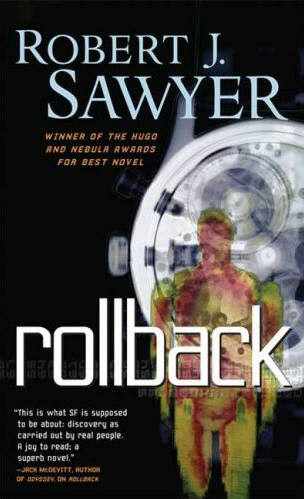
Not quite as good as 2003 when I had the #1 hardcover (Humans) and the #1 mass-market paperback (Hominids), but it still makes me happy. (I also had the #1 bestselling hardcover for the entire year in 2007, for Rollback.)

Bakka-Phoenix is located at 697 Queen Street West in downtown Toronto.

Visit The Robert J. Sawyer Web Site
and WakeWatchWonder.com

Labels: ,


Tuesday, January 5, 2010

Wake is a 2009 book


My novel Wake, which was published in the US by Ace and Canada by Viking and the UK by Gollancz, all in 2009, actually had its first appearance as a serial in Analog Science Fiction and Fact, the world's bestselling English-language SF magazine.

It was serialized in four parts, with installments in the November 2008, December 2008, the combined January-February 2009, and March 2009 issues.

But, just so there's no ambiguity, it is a 2009 book. Under both the Hugo and the Nebula rules, a serial is considered published in the year in which its final installment appeared, so Wake is eligible for the Hugo to be given in Melbourne later this year

Anyone who had a membership in last year's Worldcon in Montreal, or this year's in Australia, may cast a nominating ballot.
Visit The Robert J. Sawyer Web Site
and WakeWatchWonder.com

Labels:


Monday, January 4, 2010

Virgil

Those who've read my novel Wake know that an orangutan named Virgil figures in the plot. My Virgil is named for the character played by Paul Williams in Battle for the Planet of the Apes, and, according to the nifty Yahoo! Groups Planet of the Apes group (of which I'm a member), he'll be named Time magazine's Simian of the Year in 2018!
Visit The Robert J. Sawyer Web Site
and WakeWatchWonder.com

Labels: ,


Wednesday, December 23, 2009

Sawyer to present keynote at Julian Jaynes conference


Those of you who have read my novel Wake, about the World Wide Web gaining consciousness, know how prominently Julian Jaynes's famous book The Origin of Consciousness in the Breakdown of the Bicameral Mind figures in the book.

In fact, my main character, Caitlin Decter, even posts a review of the book (under her online name of Calculass) on Amazon.com, as part of the story:
18 of 22 people found the following review helpful:
***** A fascinating theory
By Calculass (Waterloo, ON Canada) - See all my reviews

Jaynes makes an intriguing case that our sense of self emerged only after the left and right sides of the brain became integrated into a single thinking machine. Me, I think being self-aware emerges when you realize that there's someone other than you. For most of us, that happens at birth (but for an exception, see The World I Live In by one H. Keller, also a five-star read). Anyway, Jaynes's theory is fascinating, but I can't think of a way to test it empirically, so I guess we'll never know if he was right ...
So, I am absolutely thrilled to announce that I will be giving the keynote address at the 2010 Julian Jaynes Conference on Consciousness.

The conference, held every two years by the Department of Psychology at the University of Prince Edward Island, attracts scholars of Jaynes and consciousness from all over the world. It will take place July 29-31, 2010, in Charlottetown.

More information about the conference

More about me as a keynote speaker

Visit The Robert J. Sawyer Web Site
and WakeWatchWonder.com

Labels: ,


Wednesday, December 16, 2009

311-page free holiday book sampler: Sawyer, Hamilton, Doctorow, 9 more!


Books make terrific holiday gifts, but finding perfect books for friends and family can be a time-consuming challenge. If only if the bookstore could come to us.

Thats the idea behind this In the Nick of Time! holiday sampler PDF. Inside are excerpts from a dozen new novels and nonfiction books by these bestselling authors, successful entrepreneurs, and wickedly talented storytellers:DOWNLOAD THE IN THE NICK OF TIME! HOLIDAY SAMPLER

Spot a great gift opportunity? Order from online retailers directly from the PDF, or print the order form at the end of the document and present it to your local bookseller. Helpful staff will find what youre looking for.

From high adventure to savvy business advice, youll find something special for the special someones on your holiday list — including you. You’re also welcome to share this free sampler with friends and family. Click here to download the In The Nick of Time! holiday sampler — and have the happiest of holidays!
Visit The Robert J. Sawyer Web Site
and WakeWatchWonder.com

Labels: ,


Wednesday, December 9, 2009

Jagster lives!


My latest novel, Wake, postulates a competitor for Google named Jagster. As the novel says:
In the tradition of silly Web acronyms ("Yahoo!" stands for "Yet Another Hierarchical Officious Oracle"), Jagster is short for "Judiciously Arranged Global Search-Term Evaluative Ranker" -- and the battle between Google and Jagster has been dubbed the "Ranker rancor" by the press ...
And now a technology using very much the sort of system I described for Jagster is being employed in the UK to search to gauge the degree of online piracy. (I make no comment here about the ethics of what's happening the UK, but the technique of actually analyzing every packet in the datastream to determine who is looking at what is very similar to the technique I proposed for Jagster.)

Read about it at The Register and New Scientist.

(Seekrit RJS trivia: I really named Jagster in honour of my great friend, Hugo-nominated SF writer James Alan Gardner, whom I often affectionately call "The Jagster.")

Visit The Robert J. Sawyer Web Site
and WakeWatchWonder.com

Labels: ,


Monday, November 30, 2009

British edition of Wake now available!


My UK publisher, Gollancz (an imprint of Orion), has just released the British edition of Wake, the first volume of my WWW trilogy. It's in paperback over there (the North American paperbacks come out at the end of March 2010). Woohoo!
"Sawyer's take on theories about the origin of consciousness, generated within the framework of an engaging story, is fascinating, and his approach to machine consciousness and the Internet is surprisingly fresh." —Booklist

"Sawyer continues to push the boundaries with his stories of the future made credible. His erudition, eclecticism, and masterly storytelling make this trilogy opener a choice selection." —Library Journal

"Unforgettable. Impossible to put down." —Nebula Award-winner Jack McDevitt

"Wake is about as good as it gets when it comes to science fiction. In Caitlin, Sawyer has created a likable and sympathetic hero. She's smart, sure, but also full of sass, which lends itself to some wildly entertaining reading. Sawyer's combination of writing skill and computing background come together marvelously in this book. The characters are rich and realistic, while the ideas are fresh and fascinating." —The Maine Edge, Bangor, Maine

"Sawyer is one of the most successful Canadian writers ever. He has won himself an international readership by reinvigorating the traditions of hard science fiction, following the path of such writers as Isaac Asimov and Robert A. Heinlein in his bold speculations from pure science. Clashes between personalities and ideologies fuel [Wake's] plot, but they're not what the book is about. It's about how cool science is. Sawyer has marshalled a daunting quantity of fact and theory from across scientific disciplines and applied them to a contemporary landscape — with due regard to cultural and political differences, pop culture, history, economics, adolescent yearnings, personal ambition and human frailty. —National Post

"Sawyer paints a complete portrait of a blind teenage girl, and imagines in detail — from scratch — the inside of a new being. Almost alone among Canadian writers, he tackles the most fundamental questions of who we are and where we might be going — while illuminating where we are now." —The Ottawa Citizen

"The wildly thought-provoking first installment of Sawyer's WWW trilogy explores the origins and emergence of consciousness. The thematic diversity — and profundity — makes this one of Sawyer's strongest works to date." —Publishers Weekly (starred review, denoting a book of exceptional merit)

"Emotionally satisfying and intellectually stimulating. Along with William Gibson's Neuromancer and Neal Stephenson's Snow Crash, Robert J. Sawyer's Wake presents a unique perspective on information technology. I eagerly await its sequels." —SFFaudio

"A superb work of day-after-tomorrow science fiction; I enjoyed every page." —Hugo Award-winner Allen Steele

"Once again, Robert J. Sawyer explores the intersection between big ideas and real people. Here the subject is consciousness and perception — who we are and how we see one another, both literally and figuratively. Thoughtful and engaging, and a great beginning to a fascinating trilogy." —Hugo Award-winner Robert Charles Wilson

"It's refreshing to read a book so deliberately Canadian in a genre dominated by Americans, and it's easy to see why Sawyer now routinely wins not only Canadian science fiction prizes but also international accolades. His fans won't be disappointed, and readers picking up his work for the first time will get a good introduction to a writer with a remarkable backlist." —Winnipeg Free Press
Visit The Robert J. Sawyer Web Site
and WakeWatchWonder.com

Labels:


Sunday, November 29, 2009

Fan letter of the day

Carolyn, who handles my little eBay book business (through which I sell autographed copies of my books), received this email today:
By the way, I'm reading Wake at the moment and absolutely loving it. It's rare to find a book that works at so many levels: compelling narrative, philosophically and intellectually interesting, fantastic characterisation. I'm new to Robert's work and have come via the television version of FlashForward. It's good to find some really good Sci Fi.
W00t!
Visit The Robert J. Sawyer Web Site
and WakeWatchWonder.com

Labels:


Friday, November 27, 2009

The eyePod in reality

Article from UK's Daily Mail: "Blind man fitted with 'bionic' eye sees for first time in 30 years"

Very similar to the technology used in my novel Wake. Many thanks to Jeremy Faulkner for drawing this to my attention.
Visit The Robert J. Sawyer Web Site
and WakeWatchWonder.com

Labels:


Thursday, November 5, 2009

On Rochester, NY, NPR station on Friday


I'll be interviewed about my novels Wake and FlashForward on 1370 Connection with Bob Smith, the noon (Eastern time) show on AM 1370, the NPR station in Rochester, New York, this Friday, November 6, 2009. You'll be able to listen live here, and I'll be on for most of the hour between noon and 1:00 p.m. (then it's off to Astronomicon, Rochester's SF convention, where I'm one of the guests).
Visit The Robert J. Sawyer Web Site
and WakeWatchWonder.com

Labels: , ,


Five years of working on the WWW books


Holy cow! It was five years ago today -- Friday, November 5, 2004 -- that I wrote the first words of what went on to become my WWW trilogy. Back then, it was only going to be a single book (to be called Webmind). I began writing that first book at a Write-Off writing retreat sponsored by Calgary's Imaginative Fiction Writers Association (IFWA). The first words I wrote were:
Cogito, ergo sum.

I had no idea what those words meant the first time I encountered them. I didn't even know that they were words. I knew nothing of language, or even of communication, for communication requires an other -- another -- and I knew of no one -- of nothing -- but me.

But I did exist, and that simple formulation -- I think, therefore I am -- was proof of it. By being aware of myself, of my thoughts, I knew irrefutably that I existed; to think requires a thinker.

And thinking is what I do; it's all I do. I awoke to consciousness in a vast sea, an enveloping all constituted at the limits of my perception by two opposing states, and it was these states -- the endless, seemingly random juxtaposition of opposites -- that I first, however dimly, had became aware of.
Not one word of that draft survived to the final, published version of Wake, which begins like this:
Not darkness, for that implies an understanding of light.

Not silence, for that suggests a familiarity with sound.

Not loneliness, for that requires knowledge of others.

But still, faintly, so tenuous that if it were any less it wouldn't exist at all: awareness.

Nothing more than that. Just awareness -- a vague, ethereal sense of being.

Being ... but not becoming. No marking of time, no past or future -- only an endless, featureless now, and, just barely there in that boundless moment, inchoate and raw, the dawning of perception ...
Still, that passage I wrote five years ago today was the start of the trilogy.

Of course, I haven't spent five years solid on this trilogy; I took time off to write Rollback, for instance, among many other interesting things. :)

Anyway, enough reminiscing! Time to get back to work on Volume 3, Wonder, which today passed the 50,000-word mark.
Visit The Robert J. Sawyer Web Site
and WakeWatchWonder.com

Labels: ,


Thursday, October 29, 2009

Toronto subway posters advertising Wake


They're finally up! Penguin Canada's subway poster advertisements for my novel Wake are now up on some subway cars on the Yonge-University-Spadina (main north-south) route in Toronto.

Toronto's subways are operated by the Toronto Transit Commission (TTC). I'm in Calgary right now, but sightings of the ads this week have been made by longtime SF fan Hope Liebowitz, Romanian SF writer Costi Gurgu, and Kari Trogen, sister of former Asimov's SF intern Brittany Trogen. That's Kari's snapshot below; click it for a slightly larger version.


Visit The Robert J. Sawyer Web Site
and WakeWatchWonder.ca

Labels:


Friday, October 16, 2009

Don Sakers of Analog reviews Wake


Analog Science Fiction and Fact, the world's top-selling English-language SF magazine, recently changed book reviewers.

Of course, all of us long-time Analog readers have been curious to see what sort of approach the new reviewer, Don Sakers, was going to take, and so I turned with interest to "The Reference Library" section of the October issue, never expecting to see my own latest novel, WWW:Wake, reviewed there.

After all, before Sakers had come on board at Analog, that magazine had serialized the entire book in four parts, in the November 2008, December 2008, combined January-February 2009, and March 2009 issues.

But, lo and behold, Don Sakers does review Wake in the October issue, and indeed starts out by commenting on the fact that my novel was serialized in the same magazine:
Wake was serialized in Analog recently; those who read it in these pages don't need me to tell them what a good book it is.
He then goes on to do just about the best one-paragraph synopsis of the kind of book that I write that I've ever seen:
For many years now, Robert J. Sawyer has been turning out imaginative, thought-provoking science fiction novels set in the present day and dealing with the impact of science and technology upon relatively ordinary people. A typical Sawyer tale brings together multiple diverse elements from popular culture, psychology, physics, and philosophy; stirs together plausible advances in science with appealing characters; adds some realistic depictions of actual scientists at work and a generous helping of old-fashioned sense-of-wonder; and filters the whole mix through a distinctly Canadian filter.
He notes that Wake is no exception to the above, and goes on to say:
Caitlin is an appealing enough character, and the premise is fascinating: a girl, blind from birth, gains the ability to see the structure of the Internet from within. A lesser writer would go with this story, following Caitlin as she learns to deal with this new, expanded world. But this is Sawyer, and there's much, much more going on ...

Along the way, Sawyer raises fascinating, complex questions about the nature of consciousness and self-awareness, of communication between disparate intelligences, and compassion across huge gulfs. This is a book that you'll still be thinking about for weeks after you finish reading it.
Needless to say, I think Stan Schmidt, Analog's redoubtable editor, has made a great choice for his new book reviewer. :)

You can read Don Sakers entire October "Reference Library" column online here.
Visit The Robert J. Sawyer Web Site
and WakeWatchWonder.com

Labels: ,